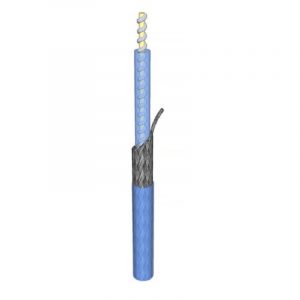
Why pipelines and related equipment need heating?
The term ancillary heating of pipelines and related equipment heating means electric heating: pipelines, flanges, valves, pumps, tanks, instruments, impulse lines and other elements of the installation – realized by electric heating cables.
There are two main reasons for heating the piping and related equipment: maintaining the medium temperature at the desired value and heating the medium to the set temperature. In practice, there is a combination of heating and maintaining the temperature of the medium, but by far the most common reason for heating is protection against freezing of water in pipelines.


How to heat pipelines and related equipment?
Ancillary heating is most often performed by installing heating cables on pipelines and related equipment, and less often by installing them in the pipelines themselves. Thermal insulation of such pipelines and equipment is necessary, because otherwise the heat losses are large and complete heating becomes uneconomical.

1 – junction box, 2 – thermostat, 3 – temperature sensor, 4 – connection cable (“cold end”), 5 – “cold end” connection, 6 – heating cable,
7 – aluminum adhesive tape, 8 – thermal insulation, 9 – sheath of aluminum sheet
Some of the most common problems that are successfully solved by installing electric heating cables are:
– protection against freezing of water pipes, sprinkler installations, hydrants, pumps, tanks, safety and reducing valves, condensing pots, etc. [10-50 W/m]
– initial heating and temperature maintenance of fuel oil pipelines, valves and tanks in boiler rooms [50-200 W/m]
– maintenance of technological temperatures of media in pipelines, tanks, pumps, instruments and other equipment in the chemical and food industry [5-200 W/m or 20-250 W/m²]
– maintenance of pipeline and equipment temperatures during transport of high viscosity media (heavy oil derivatives, fats, syrups, etc.) [50-200 W/m]
– protection against moisture liquefaction in compressed air distribution pipes [10-50 W/m]
– frost protection of drinking pipeline [10-50 W/m]
The choice of the type of heating cable, determining its dimensions and electrical characteristics depends on the specific requirements for heating pipelines and equipment. In practice, the most common variant of accompanying pipeline heating is to maintain the temperature of the medium (water, fuel oil, various chemicals …) at the desired value. Therefore, when choosing a heating cable, it is most important to know the heat loss of the piping. With sufficient certainty, heat losses per meter of pipeline are determined by the formula:

λi – thermal conductivity coefficient of insulation ⌈W/mK⌉
tž – desired pipeline temperature ⌈°C⌉
tmin – minimum ambient temperature ⌈°C⌉
dv – outer diameter of thermal insulation ⌈m⌉
du – inner diameter of thermal insulation ⌈m⌉
1,3 – safety factor
The coefficient of thermal conductivity (λi) of almost all thermal insulation materials, which are used today on pipelines, range from 0.03 to 0.05 W/mK (eg rock wool 0.04 W/mK, polyurethane 0.03 W/mK, sponge materials based on synthetic rubber 0.03-0.04 W/mK, polyethylene sponge materials 0.04 W/mK).
Heating of plastic pipes
Heating of pipelines made of thermally poorly conductive materials (various plastics) can be efficiently realized by wrapping such pipelines with aluminum foil. The heating cables are fastened to the aluminum foil, and then everything is wrapped again with aluminum foil. This creates a new “pipe” of thermally well-conducting material (aluminum) in which the heating cables are integrated.

plastic piping
the first aluminum foil
the second aluminum foil
heating cable
Due to the different dimensions, shapes and required heating characteristics of pipes and equipment and the different properties of the applied heating cables, it is impossible to give a universal recommendation for installation. Nevertheless, the following four principles should always be adhered to:
- there is no use in installing heating cables if we do not put thermal insulation over them
- active (“warm”) parts of heating cables along their entire length should adhere as well as possible to heated objects
- thermal insulation must never come between the active parts of the heating cables and the heated objects
- the active parts of the heating cables must not touch or cross each other (except for self-regulating heating cables)
- passage of heating cables through thermal insulation and through cable ducts or installation pipes, to connecting el. box, should be performed with their inactive parts (so-called “cold ends”)
- the measuring sensor of the thermostat is placed opposite the heater, and in the case of spiral heaters between its “traces”; thus the sensor is located at the potentially coldest point of the pipeline
Laying heating cables on pipelines
Forms of laying heating cables on pipelines are divided into two basic groups: linear or longitudinal laying and spiral.
Linear or longitudinal installation of heating cables is the dominant form of installation of heating cables on straight pipelines, but also on pipelines of complex shapes. In the case of straight pipelines, depending on their cross-section and the required heating power, one, two, three or more heating cables are laid along the pipeline.
In practice, we most often encounter pipelines of complex shape, which are multi-branched and contain various equipment (flanges, valves …), and in this case the most practical is to install heating cables in the form of a loop that has a beginning and end in the same place (at each part of the pipeline there are two traces of heaters).


When laying heating cables on horizontal pipelines, they should be placed in the lower zone of the pipeline, and the exact position depends on the number of heating cables.
The thermostat sensors are placed on the opposite side – on top of the pipeline. In the case of vertically arranged pipelines, the heating cable is distributed symmetrically along the circumference, and the thermostat sensors between them.


Spiral installation of heating cables is not very common as it is only suitable for straight, relatively short pipelines that require a higher concentration of heating power. In practical application, there are three forms of spiral installation of heating cables:
- single spiraling
- double or bifilar
- spiraling by segments

Laying heating cables on piping equipment
The equipment that is an integral part of the pipeline is of different shapes and dimensions (flanges, valves, pumps, instruments …), but its common feature is that it always has higher heat losses than the pipeline. Therefore, it needs to be heated more vigorously, and this is achieved by laying a larger amount of heating cables. In addition, the heating cables must be laid in such a way that they can be easily disconnected and thus allow replacement and repairs on the piping equipment without damaging the heating cables or even interrupting the heating operation.
Typical examples of installing heating cables on the most common piping equipment are shown in the drawings of the flange, valve and pump, noting that the same form of installation is repeated on the opposite, in the drawing, invisible side.


Fixing heating cables
We install heating cables on pipelines and equipment up to ambient temperature + 5 ° C. Below that temperature, most heating cables become tough and difficult to shape, and prefabricated adhesive tapes are less adherent. If we have to approach the installation even in these conditions, it is very helpful to briefly switch on and heat the heating cables themselves.
We fasten the heating cables to the pipelines with metal clamps (aluminum or galvanized sheet metal), PVC ties and adhesive tapes (plastic and aluminum), and to the equipment by tying with galvanized wire.
For low-temperature heating (up to + 90 ° C), the most efficient installation is with reinforced aluminum adhesive tapes. It is desirable to glue the heating cables along the entire length of the pipes or to wrap them all together with aluminum foil (thickness approx. 100 μm). When heating at higher temperatures, it is also good to wrap everything with aluminum foil, except that the basic fastening is done with metal clamps spaced about 300 mm apart.
Fixing self-regulating heating cables
When installing self-regulating heating cables, on pipelines and equipment, the task is simple to solve because this type of heating cables, due to the property of self-regulating temperature, is not harmed by touching and crossing traces of heating cables. As far as fastening is concerned, the same recommendations apply as for all other heating cables.

How to heat pipes with a heating cable with a thermostat (“plug-in thermostat GKT)?
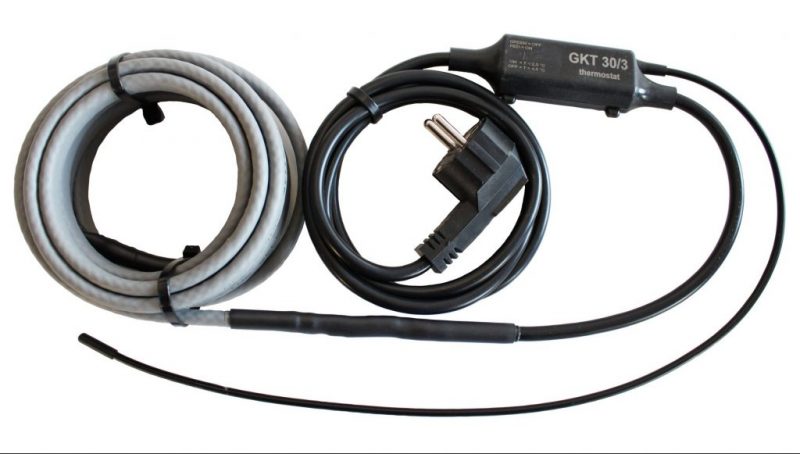
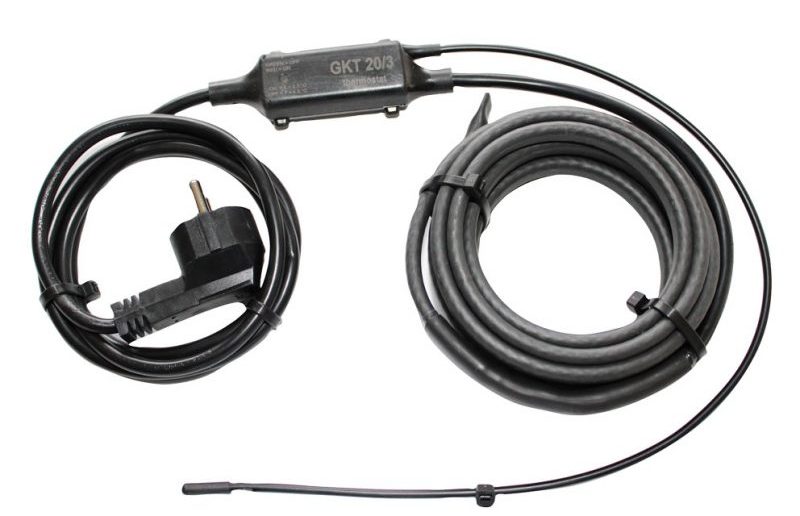
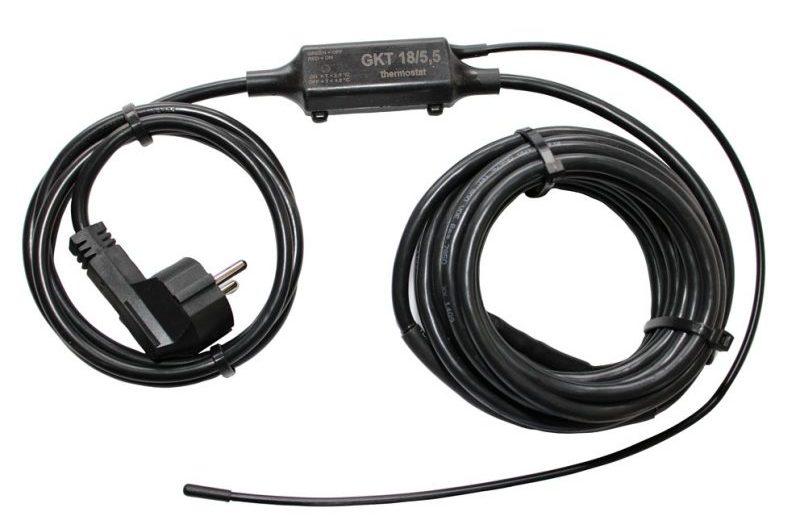
Heating cables with thermostat, type GKT, are pre-dimensioned and fully functional units of electric heating cables and electronic thermostats prepared for installation. They are designed for quick and easy installation when protecting pipelines and related equipment.

The basic principles of installation are the same as for the previously described installations of heating cables intended for heating pipelines and related equipment.
When using heating cables which, due to the need for heating power, must be significantly longer than the protected pipeline, single spiraling or spiraling by segments is used.
In the case of single spiraling, care must be taken to ensure that the windings are evenly distributed along the entire length of the pipeline. The measuring sensor of the thermostat should be wrapped so that it is located in the middle between two “traces” of the heater.

The process of spiraling by segments is faster and simpler than single spiraling. All you have to do is divide the piping into equal segments, assign equal lengths of heaters to them and then wrap the heater loops around the piping making sure that the winding distances are equal.


Installation of GKT on pipelines that are different in length from the length of the active part of the heater
It is desirable that the length of the heater is equal to the length of the protected pipeline, but minor deviations are allowed (10-15 cm at each end of the pipeline). When the heater is slightly longer than the protected pipeline (up to 1 m) it can be returned on the opposite side of the pipeline.


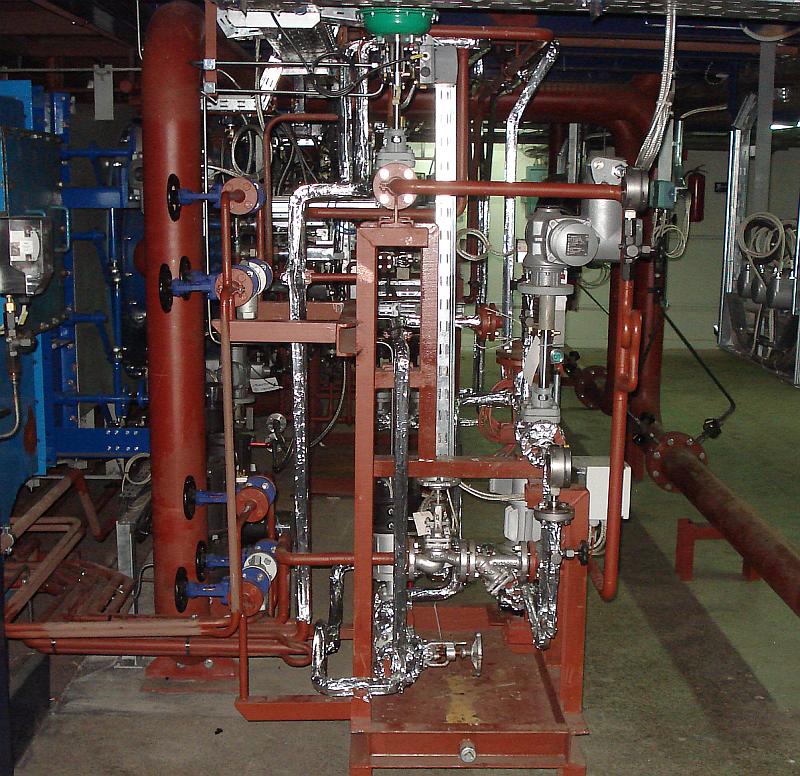

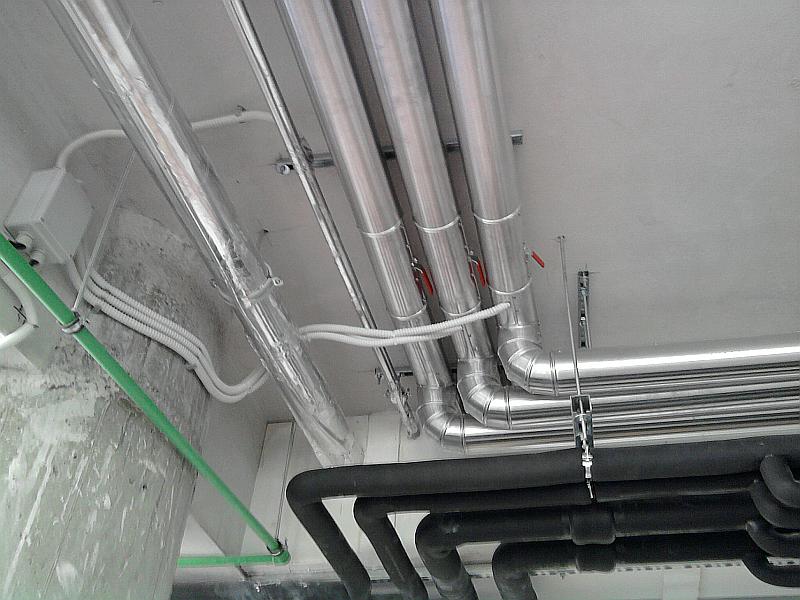


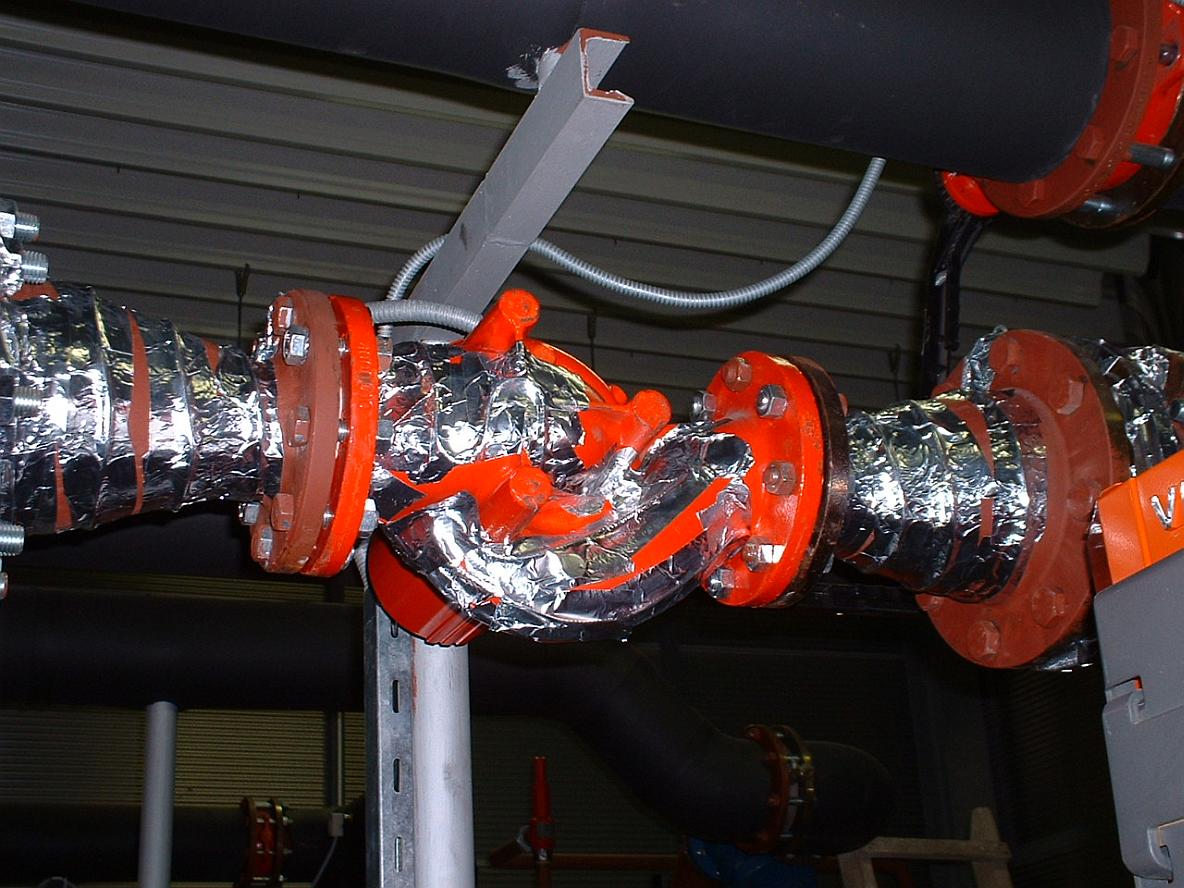


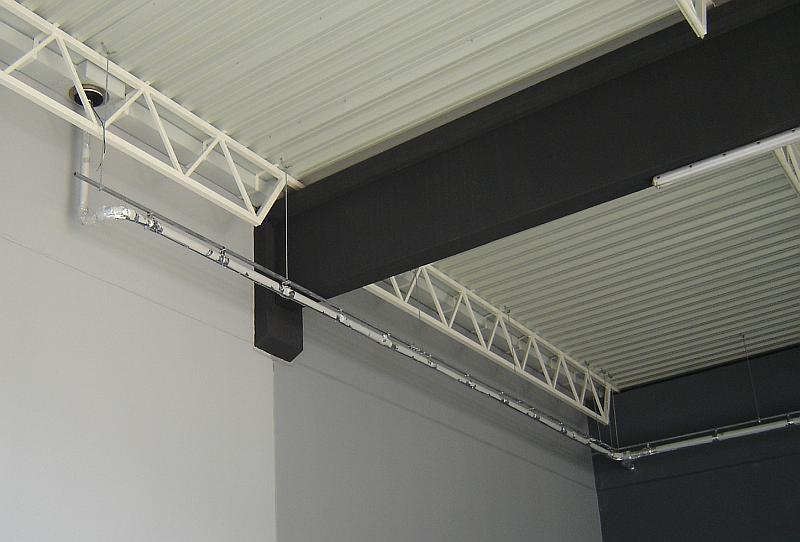

Simpler pipelines
For less demanding heating of pipelines and related equipment or for heating of pipelines and equipment of smaller dimensions, the use of simple capillary thermostats type F2000 will also satisfy. F2000 0 to 40 °C will be good for protection against water freezing, and F2000 30 to 120 °C will be good for heating, for example, fuel oil installations.
When you want the simplest, and most reliable, protection against freezing of pipelines and related equipment, we recommend an electronic thermostat on the cable with a plug, type ETU 2.5 / 4.5 ° C, which is set to turn on heating when the temperature of the protected object drops to 2 , 5 ° C, and turns off when it rises to 4.5 ° C. If, in addition to such thermostats, factory-connected heating cables of different unit powers and lengths are used, then they are called “plug-in thermostat GKT” (heating cable with thermostat), and represent a heating variant developed for “your own master” installation.


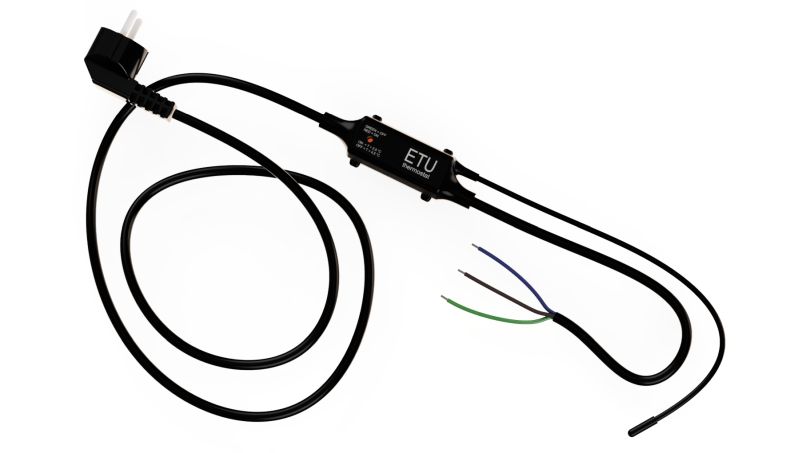
More complex pipelines
For more complex and demanding heating of pipelines and related equipment and those that require power, control and monitoring from one place, it is best to use electronic thermostats type: DT231, DT235, DT236 or DT238. These are thermostats with NTC temperature sensor, housed in a standardized housing with a width of 2 modules and adapted for mounting on a DIN 35 rail. They have an on / off button, signal LEDs for thermostat status control and potentiometers for setting the desired temperature and switching difference (hysteresis). What makes them stand out, in relation to all other thermostat manufacturers, is the allowed output relay current of as much as 25 A.
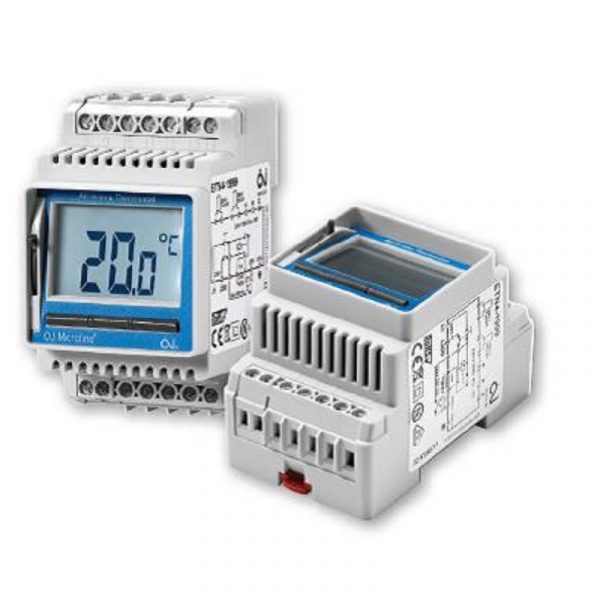
If you need an electronic thermostat with digital temperature display, a lot of advanced features and ON / OFF or PWM / PI control mode – the right solution is a thermostat type ETN4-1999. Its temperature control range is from -19.5 to 70 ° C, and the adjustable switching difference is from 0.3 to 10 ° C.
When there is a need for the electronic thermostat to have a digital temperature display and to be installed on the door of electrical control box, so that the temperature data is always easily visible, and the possibility of adjustment is available to everyone – a thermostat type IC902Plus is suitable.




How to solve pipeline heating?
For many years, in addition to the production of equipment for electric pipeline heating and related equipment, we have also done installation. This was especially pronounced while, in addition to today’s dominant heating of anti-freeze water pipelines, there was also a need to achieve and maintain certain technological temperatures in the industry. During this period, we have gained a wealth of experience so we believe we can offer you solutions to many pipeline heating problems. Of course, for that we need your cooperation and a series of data that you need to provide us.
How much data we need depends on the complexity of the pipeline and related equipment as well as the requirements that are set for heating. In order not to enter the area of the most complex heating, we will state what data we need for the most commonly realized:
- Pipeline diameter and material
- Length for simple pipelines or quoted isometric drawing for complex pipelines
- Minimum ambient temperature of the pipeline
- Desired pipeline temperature Type and thickness of thermal insulation
- Division into technological units in more complex pipelines
- Photos for more complex pipelines
For almost all heating where the temperature of the pipeline is maintained, these are sufficient data, in case the pipeline and the medium in it must be heated in addition to covering the losses, we will ask for some additional information.
We no longer offer installation because we try to prepare all the necessary equipment in such a form that local installers can install, connect and put it into operation themselves. This is certainly the cheapest option for an investor, and if it gets stuck somewhere, we are here to help with advice.
What products do we offer?
- heating cables with thermostat ( plug-in thermostat GKT )
- thermostat they are used for shorter and simpler pipeline
- s easy installation without hiring a master
- classic resistive wire and self-regulating heating cables type SSAP and SRF
- they are made for a specific pipeline with all the related equipment where the maximum temperature does not exceed 65 °C
- self-regulating cables type HWSRL, SRM and SM2
- they are made for a specific pipeline with all the related equipment where the maximum temperature does not exceed 90 °C
- classic resistive wire heating cables type GSC and TCT
- they are made for a specific pipeline with all the related equipment where the maximum temperature does not exceed 150 °C
In order to achieve the desired temperature, reduce operating costs and protect heating cables from overheating and thermal destruction, it is necessary to monitor and manage the temperature of pipelines and equipment. For this purpose, we recommend thermostats of different degrees of complexity and accuracy of temperature maintenance.
- electronic thermostats type ETU
- compact thermostat high-precision design for simpler pipelines
- capillary thermostats F2000 0 to 40 °C and F2000 35 to 120 °C
- they are used for shorter and simpler pipelines
- electronic thermostats with digital temperature display: ICplus 902 and ETN4-1999
- electronic thermostats without temperature display: DT231, DT235, DT236 and DT238
- electrical control boxes with complete equipment for heating pipelines
- reinforced aluminum adhesive tapes for heater mounting


Other information related to the topic of pipeline heating can be found in the following documents:
- Pipeline heating – principles
- Pipeline heating – installation
- Heating cables with GKT thermostat
- Pipeline heating – installation of GKT
- INQUIRY FORM with example for taking measures – pipeline heating
If you have questions related to electric heating pipelines feel free to contact us.
Our professional team of certified engineers and thirty years of experience in the implementation of heating systems is at your service.